
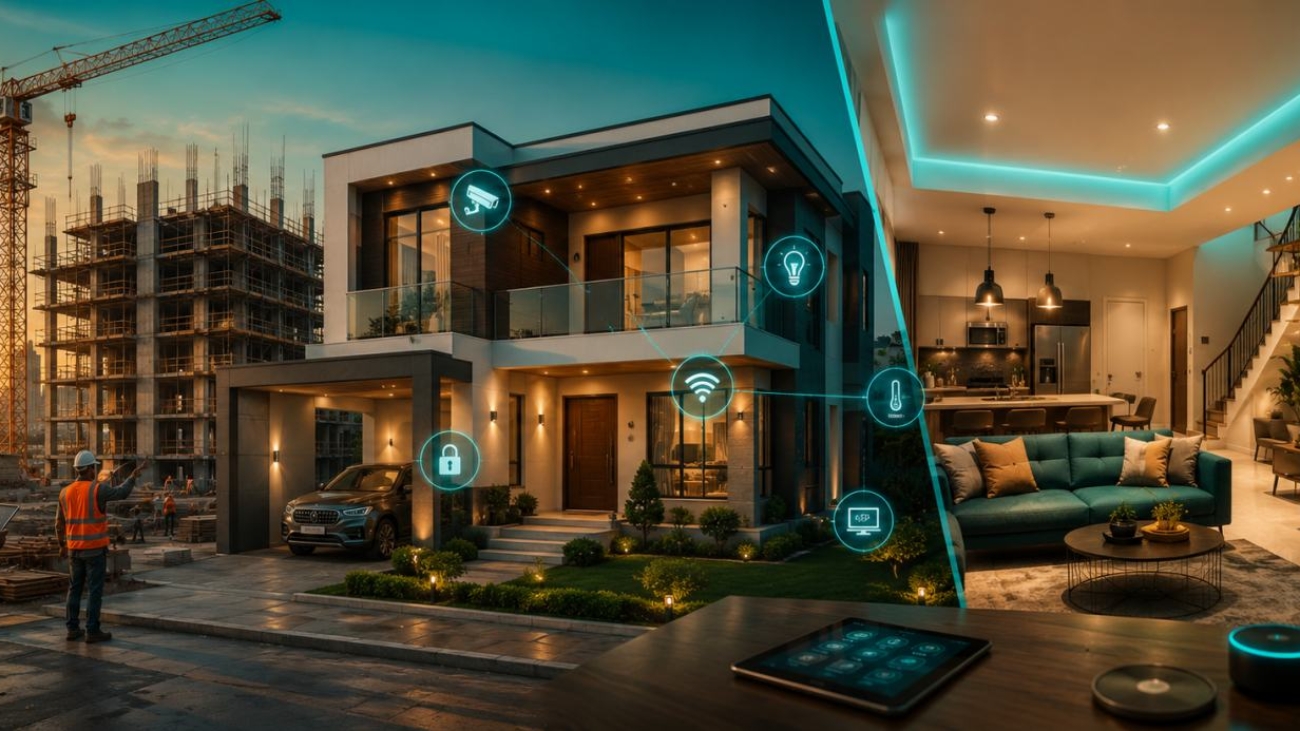
Nigeria’s construction industry is evolving rapidly, driven by urban expansion, population growth, and the need for modern, efficient living spaces. Alongside this growth, smart home technology is emerging as a transformative force, redefining how buildings are designed, constructed, and experienced. Across Nigeria, the fusion of construction and smart innovation is shaping a new era of infrastructure.
The Growth of Nigeria’s Construction Sector
The construction industry in Nigeria has seen significant expansion over the past decade. Major cities like Lagos, Abuja, and Port Harcourt are witnessing a surge in residential estates, commercial complexes, and infrastructure projects.


This growth is fueled by:
- Increased demand for housing
- Government infrastructure investments
- Private sector real estate development
- Rising middle-class population
Developers are now focusing not just on quantity, but also on quality, sustainability, and technological integration.
Emergence of Smart Homes
Smart homes are redefining residential living in Nigeria. These are houses equipped with technology that allows automation and remote control of systems such as lighting, security, temperature, and appliances.


Key features of smart homes include:
- Automated lighting and climate control
- Smart security systems (CCTV, motion sensors)
- Voice-controlled devices
- Energy monitoring systems
- Remote access via mobile apps
These innovations are particularly attractive to urban homeowners seeking convenience, security, and energy efficiency.

Integration of Technology in Construction
Modern construction in Nigeria is increasingly incorporating technology from the ground up. Architects and engineers are designing buildings with smart systems in mind, ensuring seamless integration.


Technologies shaping the sector include:
- Building Information Modeling (BIM)
- Prefabrication and modular construction
- Energy-efficient building materials
- IoT-enabled infrastructure
This integration not only improves construction efficiency but also reduces long-term operational costs for homeowners.
Sustainability and Energy Efficiency
With rising energy costs and environmental concerns, sustainability has become a priority in Nigeria’s construction and housing sector. Smart homes contribute significantly by optimizing energy usage.
Solar panels, inverter systems, and smart energy management tools are becoming common features in new developments. These solutions help reduce reliance on inconsistent national power supply and lower carbon footprints.

Challenges Facing Adoption
Despite the progress, several challenges remain:
- High initial cost of smart home technologies
- Limited awareness among consumers
- Inconsistent power supply affecting smart systems
- Shortage of skilled professionals in smart construction
However, as technology becomes more affordable and awareness increases, these barriers are gradually diminishing.
Opportunities for the Future
The intersection of construction and smart technology presents immense opportunities in Nigeria:
- Growth in proptech (property technology) startups
- Job creation in tech-enabled construction
- Expansion of luxury and middle-income smart housing
- Increased foreign investment in real estate
Smart cities are also on the horizon, where entire communities are built with integrated technology systems for transportation, energy, and security.
Conclusion
Construction and smart home innovation in Nigeria are more than just trends—they are essential components of the country’s future development. As urbanization continues and technology advances, the demand for intelligent, efficient, and sustainable living spaces will only grow.
By embracing smart construction practices and investing in modern housing solutions, Nigeria is laying the foundation for a more connected, secure, and energy-efficient future.